
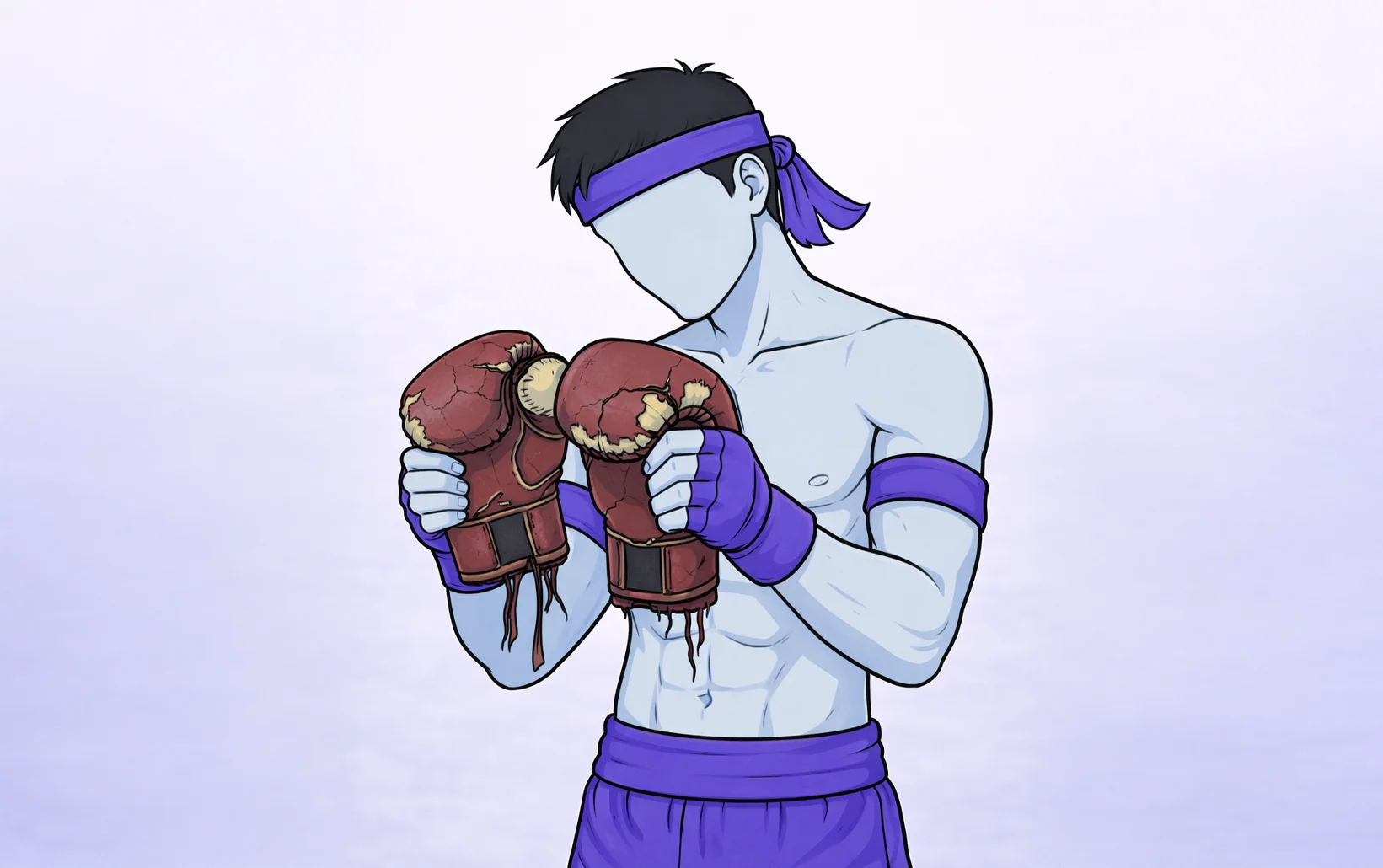
Most Muay Thai gloves last around 6 months to 2 years. The exact lifespan depends mainly on how often you use them, how well you dry and store them, and whether they are made from leather or synthetic materials.
As a rough guide, a good pair of leather gloves can last anywhere from around 6 months with very heavy use (for example, training twice daily) up to 2-3 years with occasional use (1-2 sessions per week) when cared for properly. Synthetic gloves are usually cheaper and tend to wear out sooner, often lasting around 4 months with very heavy use, and up to 1-2 years with occasional use, depending on quality and care.
Muay Thai gloves are exposed to repeated impact, sweat, and compression, which gradually breaks down both the outer material and the internal padding over time.
How Long Do Leather Muay Thai Gloves Last?
Leather Muay Thai gloves generally last longer than synthetic gloves because the material is more durable and better able to withstand repeated impact, flexing, and sweat when properly cared for.
A realistic lifespan for leather Muay Thai gloves is:
- Heavy use (twice daily): around 6 months
- Regular use (3–5 times per week): around 8–18 months
- Occasional use (1–2 times per week): around 2–3 years
Higher-quality leather gloves with good padding and proper after-training care tend to sit at the upper end of these ranges.
How Long Do Synthetic Muay Thai Gloves Last?
Synthetic Muay Thai gloves are usually more affordable but tend to wear out faster than leather gloves. Materials such as PU or synthetic leather are more prone to cracking, splitting, or peeling, particularly around high-stress areas like the knuckles, palm, and thumb.
A realistic lifespan for synthetic Muay Thai gloves is:
- Heavy use (twice daily): around 4 months
- Regular use (3–5 times per week): around 6–12 months
- Occasional use (1–2 times per week): around 1–2 years
With good care, some synthetic gloves can last longer, but they generally have a shorter lifespan than leather equivalents.
What Actually Determines When Gloves Are “Worn Out”
A glove can look rough but still be usable. The biggest factor is usually the padding, not the cosmetics.
Padding breakdown is the main issue
Gloves are effectively worn out when:
- The padding feels flat, lumpy, or uneven
- Your knuckles start taking more impact than normal
- The gloves feel less protective on pads or the bag
- The wrist support feels unstable or the closure no longer holds well
If the padding is compromised, the glove may no longer protect your hands or your training partner properly.
Cosmetic wear does not always matter
Some gloves lose colour, logos, or printed designs quickly from repeated padwork or bagwork. This is common and does not necessarily mean the glove is worn out. A glove can look “worn” but still be structurally fine if the padding and stitching are holding up.
How to Make Muay Thai Gloves Last Longer
The most important thing you can do to extend the life of Muay Thai gloves is to keep them dry between sessions. Moisture left inside gloves breaks down materials over time and leads to odour, lining damage, and faster padding wear.
Dry your gloves after every session
After training:
- Open the gloves fully (do not leave the wrist strap tightly closed)
- Let them air out in a dry, well-ventilated place as soon as possible
- Remove them from your gym bag immediately after use
Keep moisture away from stored gloves
When storing gloves:
- Keep them separate from wet towels or sweaty clothing
- Avoid sealed or unventilated spaces while they are still damp
- Make sure the inside of the glove is fully dry before long-term storage
Use glove deodorisers or inserts
Glove deodorisers or cedar inserts can help by:
- Absorbing moisture after training
- Reducing odour build up
- Keeping the inside of the glove drier between sessions
Use heat (but carefully)
Heat can help gloves dry faster, but it should be gentle:
- A glove dryer or heater designed for boxing gloves works best
- If using a radiator, place gloves nearby rather than directly against it
- Avoid prolonged high heat, as it can dry out and damage materials
When Should You Replace Muay Thai Gloves?
If the padding no longer protects your hands properly, it’s time to replace the gloves, regardless of how they look. Gloves that feel flat, uneven, or no longer absorb impact effectively can increase the risk of hand injuries, even if the outer material still appears usable.
Another common sign is the onset of new pain or increased stress in the hands, knuckles, or wrists during or after training. This can indicate that the padding is no longer doing its job, even if the outer material still appears usable.
How Muay Thai Glove Wear Compares to Boxing Gloves
Compared to boxing gloves, Muay Thai gloves tend to wear out faster. This is mainly due to more frequent training sessions, regular bag and pad work, and additional stress from clinching and catching kicks, all of which place extra strain on both the outer material and the padding.
Frequently Asked Questions
Answers to common questions about how long Muay Thai gloves last.