
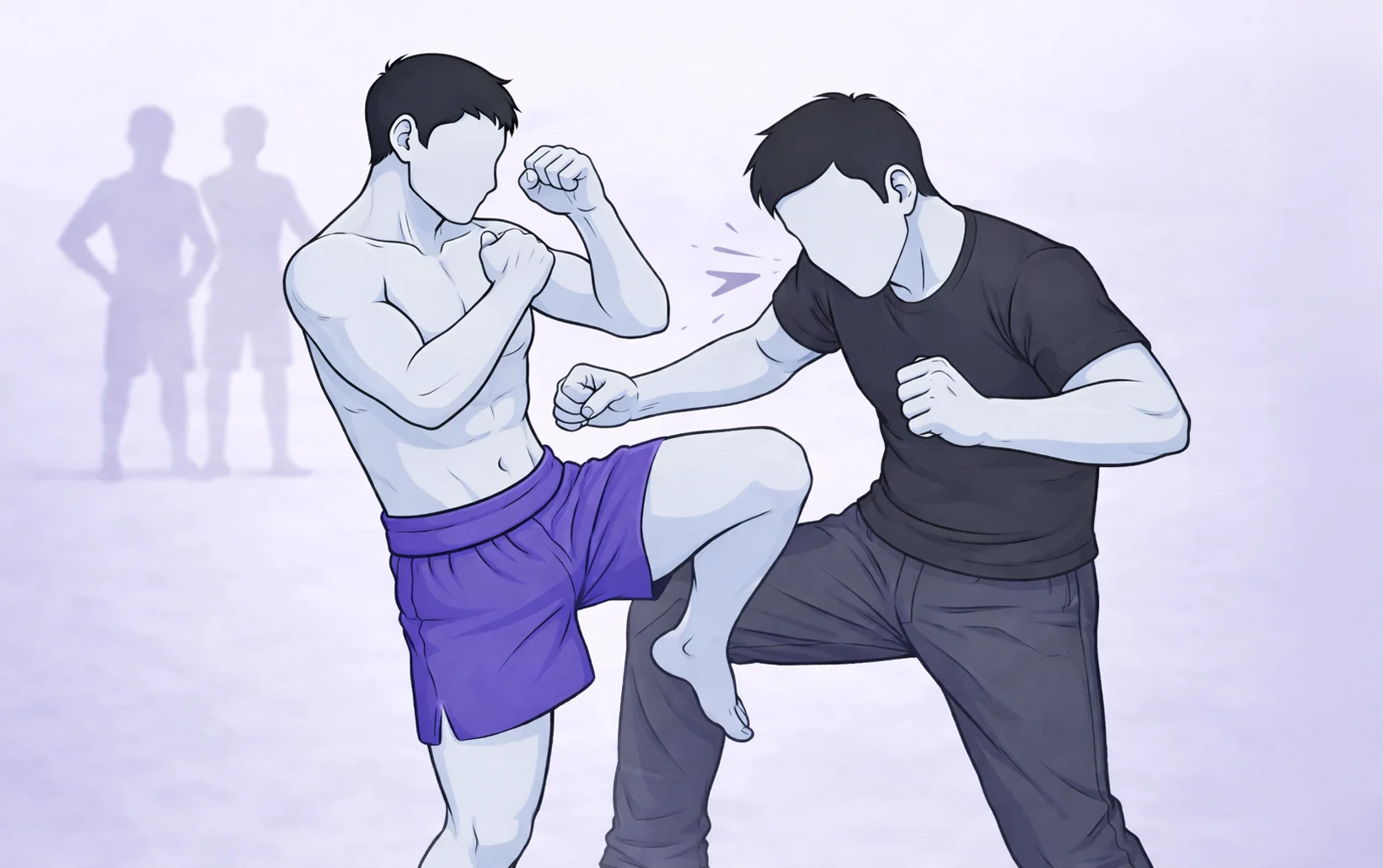
Muay Thai can be effective for self defence because it teaches distance control, striking, and how to use the body under pressure. Training involves punches, kicks, elbows, and knees, along with clinch work that focuses on balance, control, and short-range fighting rather than ground grappling.
That said, self defence is not the same as fighting as a sport, as on the streets rules don't exist. The safest option in any real confrontation is always to avoid, de-escalate, or leave the situation where possible. Muay Thai skills may help as a last resort, but they do not replace situational awareness and good decision making.
What Muay Thai Can Help With
Muay Thai training can provide several attributes that translate well outside the gym.
Striking and distance control
Muay Thai focuses on punches, kicks, knees, and elbows, which can help someone understand range, timing, and how to generate force efficiently.
Balance and stability
Training improves balance and posture, which can help reduce the risk of being knocked over or losing footing in unstable situations.
Composure under pressure
Sparring and pad work expose fighters to controlled physical contact, meaning they become more accustomed to being hit and maintaining focus while under pressure. This can help reduce panic and improve decision making in stressful situations.
Awareness of movement and intent
Training regularly with partners helps people recognise body positioning, movement patterns, and common cues that indicate when someone is about to strike. This awareness can improve reaction time and defensive responses.
Physical conditioning
Regular Muay Thai training improves strength, cardio, and resilience, which can matter in physically demanding situations.
Limitations of Muay Thai for Self Defence
While Muay Thai offers useful skills, it also has clear limitations in real-world scenarios.
- It is trained within a sporting rule set
- It does not address multiple attackers or attackers with weapons
- It assumes a relatively equal, face to face engagement
- It does not focus on legal or situational consequences
Real-life situations are unpredictable, and techniques that work well in the gym may not always translate cleanly outside of it.
De-Escalation and Avoidance Come First
The most effective form of self defence is not fighting at all.
Good self defence usually prioritises:
- Awareness of surroundings
- Avoiding risky situations
- Verbal de-escalation
- Creating space and leaving safely
Generally, physical skills should be viewed as a last line of defence, not a primary strategy.