
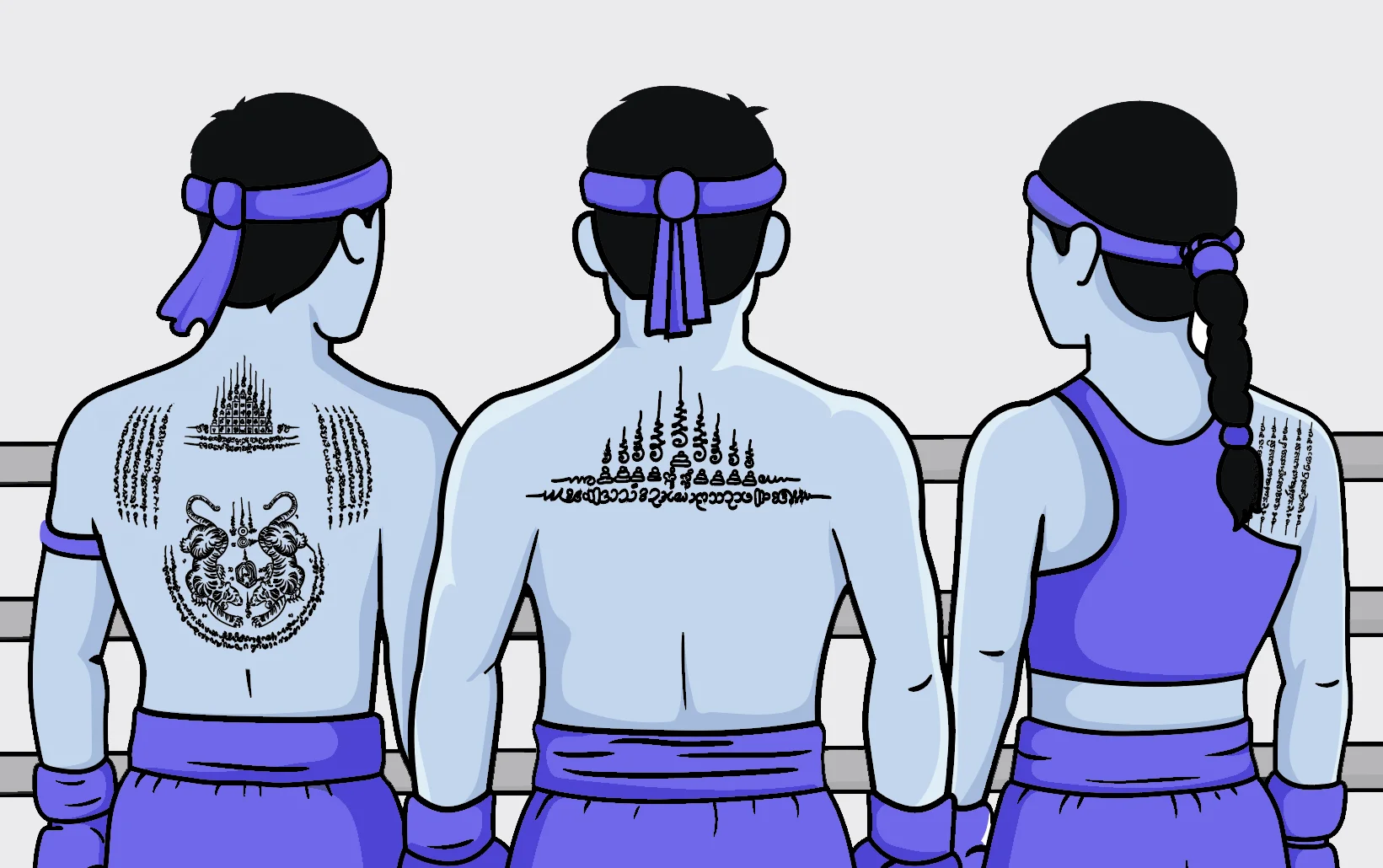
Sak Yant tattoos are traditional tattoos from Thailand made up of symbols, geometric patterns, and written script. Each design has a fixed meaning linked to protection, discipline, strength, or guidance. They are traditionally applied using a hand-poke method, usually by a Buddhist monk or Ajarn (master), using a long sharp needle made from bamboo or steel rather than a typical tattoo machine.
What Does Sak Yant Mean?
Sak Yant roughly translates to:
- Sak (สัก) – to tattoo
- Yant (ยันต์) – a sacred geometric diagram, talisman or spell
Sak Yant tattoos typically consist of three main components:
- The Yantra, the structured design that forms the overall layout of the tattoo.
- The written text, usually in Pali (language) or Khom script.
- The associated mantra or blessing, performed during and after the tattooing process.
How Do Sak Yant Tattoos Get Their Meaning?
Sak Yant tattoos follow a traditional system where each design is created for a specific purpose. Their meaning is determined by the exact symbols used, the way they are arranged, and the text written within the design. These elements are chosen according to established tradition, passed down through generations, rather than personal preference, which is why two Sak Yant tattoos with different designs will have different meanings.
Traditionally, a Sak Yant tattoo is finalised through a blessing called a kata, performed by the monk or Ajarn during and after the tattooing process. Throughout this process, sacred Pali chants are recited which are believed to give the tattoo its intended function. Without this blessing the Sak Yant is typically regarded as incomplete.
Common Sak Yant Designs and Their Meanings
Most Sak Yant tattoos follow a small number of established design structures. Each design can have many variations, with changes to the symbols, layout, and written text, which alter the specific meaning of the tattoo. Common examples are:
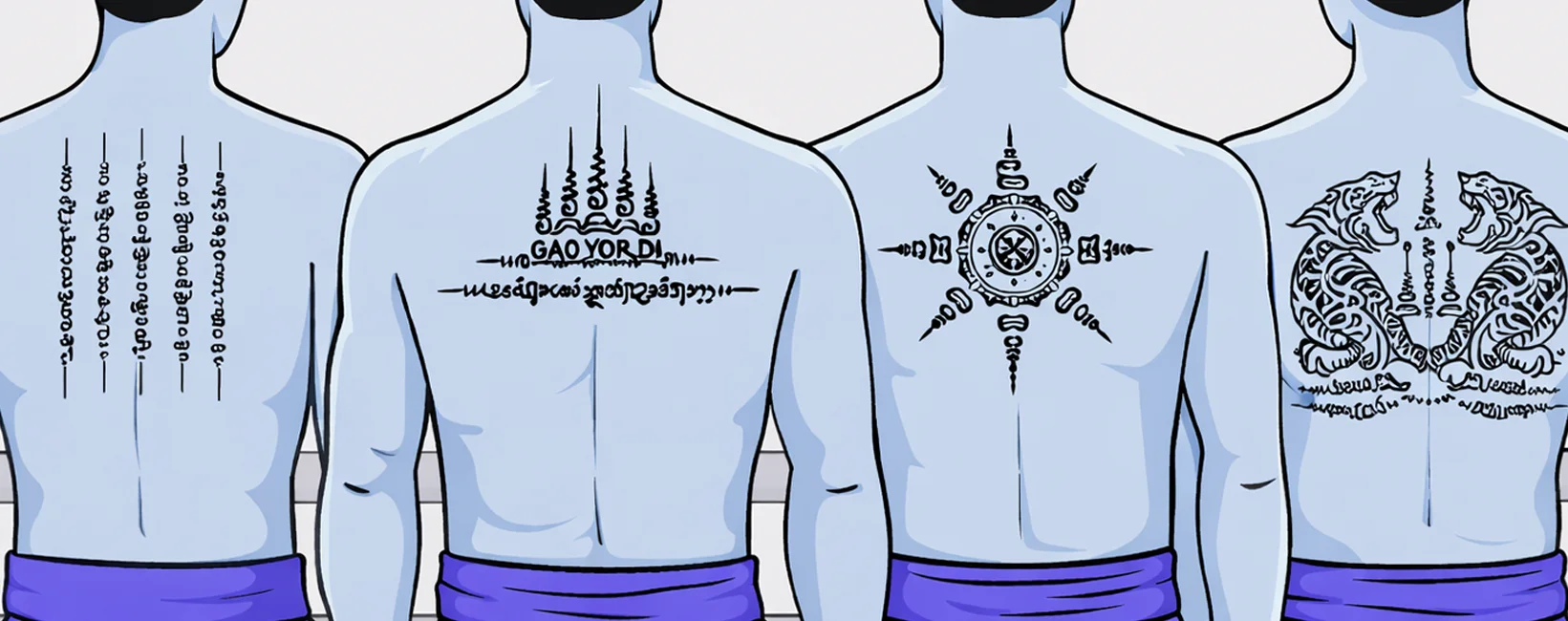
Hah Taew (Five Lines)
Hah Taew is structured as five vertical lines, each traditionally associated with a different type of blessing. The design is believed to originate from ancient protective yantra inscriptions, with each line representing a specific purpose such as protection, fortune, or moral guidance.
Gao Yord (Nine Spires)
Gao Yord features nine pointed spires arranged in a symmetrical structure and is often considered a foundational Sak Yant design. It symbolizes the nine peaks of Mount Meru (Sumeru), the sacred mountain in Buddhist, Hindu and Jain cosmologies. Each spire signifies an attribute or blessing.
Paed Tidt (Eight Directions)
Paed Tidt is structured around eight directions, typically arranged in a circular layout. Each direction represents protection from harm coming from that side. The design is linked to traditional beliefs about movement and orientation.
Suea (Tiger)
Suea designs feature one or two tigers and are traditionally associated with strength and authority. The tiger is regarded as a symbol of power and dominance. The design structure focuses on balance and posture, while variations may include changes in the tiger’s stance or the accompanying script.
How a Sak Yant Tattoo Is Done
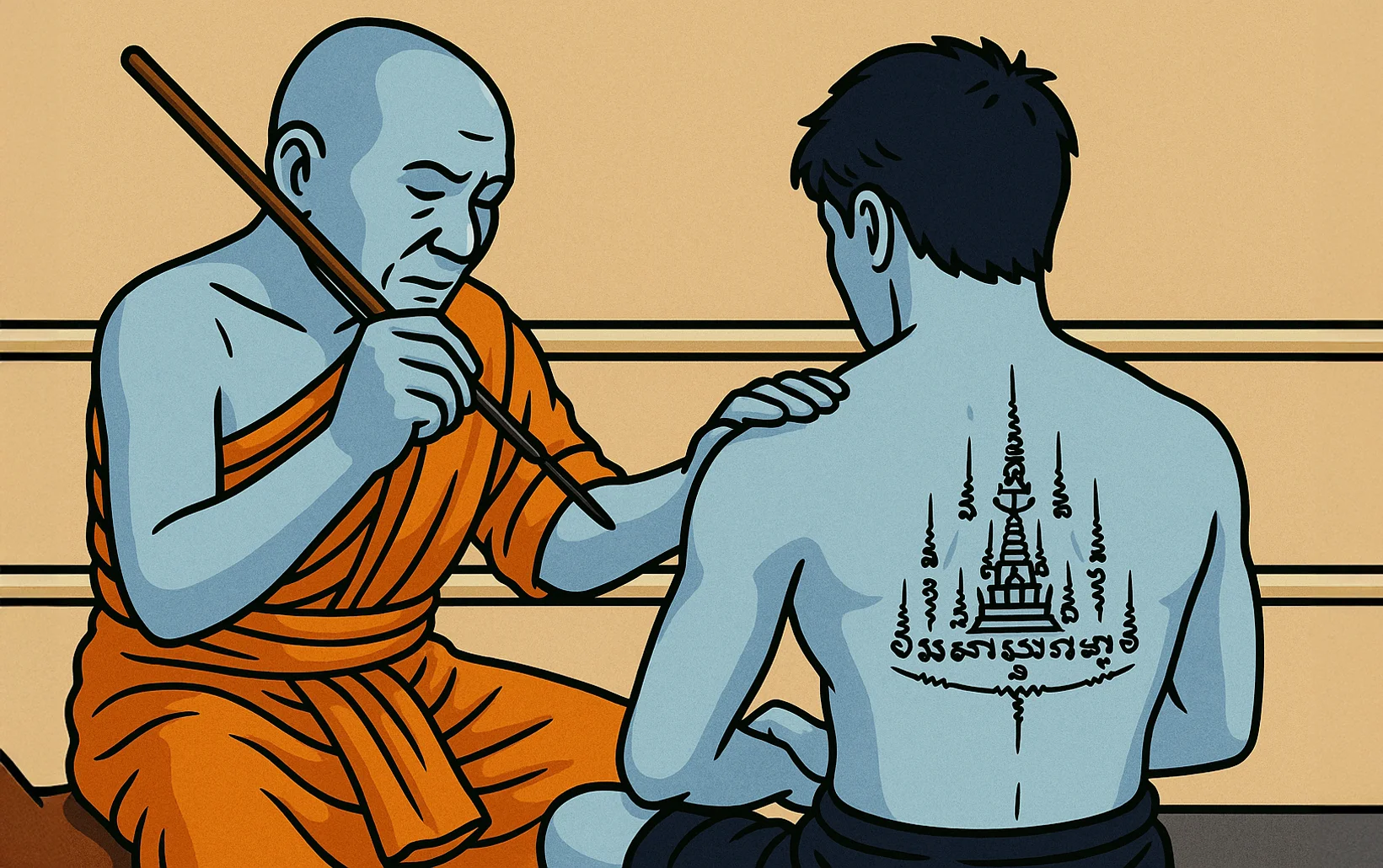
A traditional Sak Yant tattoo is applied by hand using a long needle, rather than a tattoo machine. The needle is dipped in ink and tapped into the skin repeatedly to build the lines and text. This method is sometimes done with a bamboo needle, but today it is commonly done with a steel needle for control and hygiene.
In many traditional settings, the design is first marked onto the skin, then tattooed line by line. The tattoo may include the main layout (the yantra), the written script, and any symbols linked to the design. A blessing (kata) is typically recited during and/or after the tattooing process, depending on the tradition and the person performing it.
The Process of Getting a Sak Yant Tattoo
The process of getting a Sak Yant tattoo can vary depending on where and by whom it is done. Traditionally, you can get a Sak Yant tattoo by visiting a Buddhist monk at a temple and offering a donation.
Sak Yant tattoos can also be done by Ajarns, who are trained masters that are not monks. Ajarns often work privately or in studios, and the process may involve a set price and, depending on availability, booking in advance.
In modern tattoo studios, particularly in tourist areas, Sak Yant tattoos can be booked like a typical tattoo appointment.
Monk vs Ajarn: What’s the Difference?
A monk is an ordained Buddhist monk who performs Sak Yant tattoos within a religious setting, usually at a temple. When a Sak Yant is given by a monk, it is considered a religious act, and the tattoo is typically received through a donation rather than a fixed price. In many cases, the monk will choose or adjust the Sak Yant design and its placement based on their assessment of the individual, rather than the person selecting it themselves. Monks may also impose certain behavioural guidelines associated with the tattoo.
An Ajarn is a trained Sak Yant master who is not ordained as a monk. Ajarns usually work outside temples and may operate private studios. While they still follow traditional Sak Yant practices, Ajarns often allow more flexibility in terms of design choice, placement, and scheduling.
Both monks and Ajarns are recognised within Sak Yant tradition, and the choice between the two usually depends on whether someone is seeking a more religious experience or a more flexible, appointment-based process.
Rules and Restrictions After Getting a Sak Yant
Why Sak Yant Tattoos Are Common in Muay Thai
Is a Sak Yant Tattoo Right for You?
Celebrities with Sak Yant Tattoos
Frequently Asked Questions about Sak Yant Tattoo's
Answers to common questions about Sak Yant tattoos and their traditional meaning.