
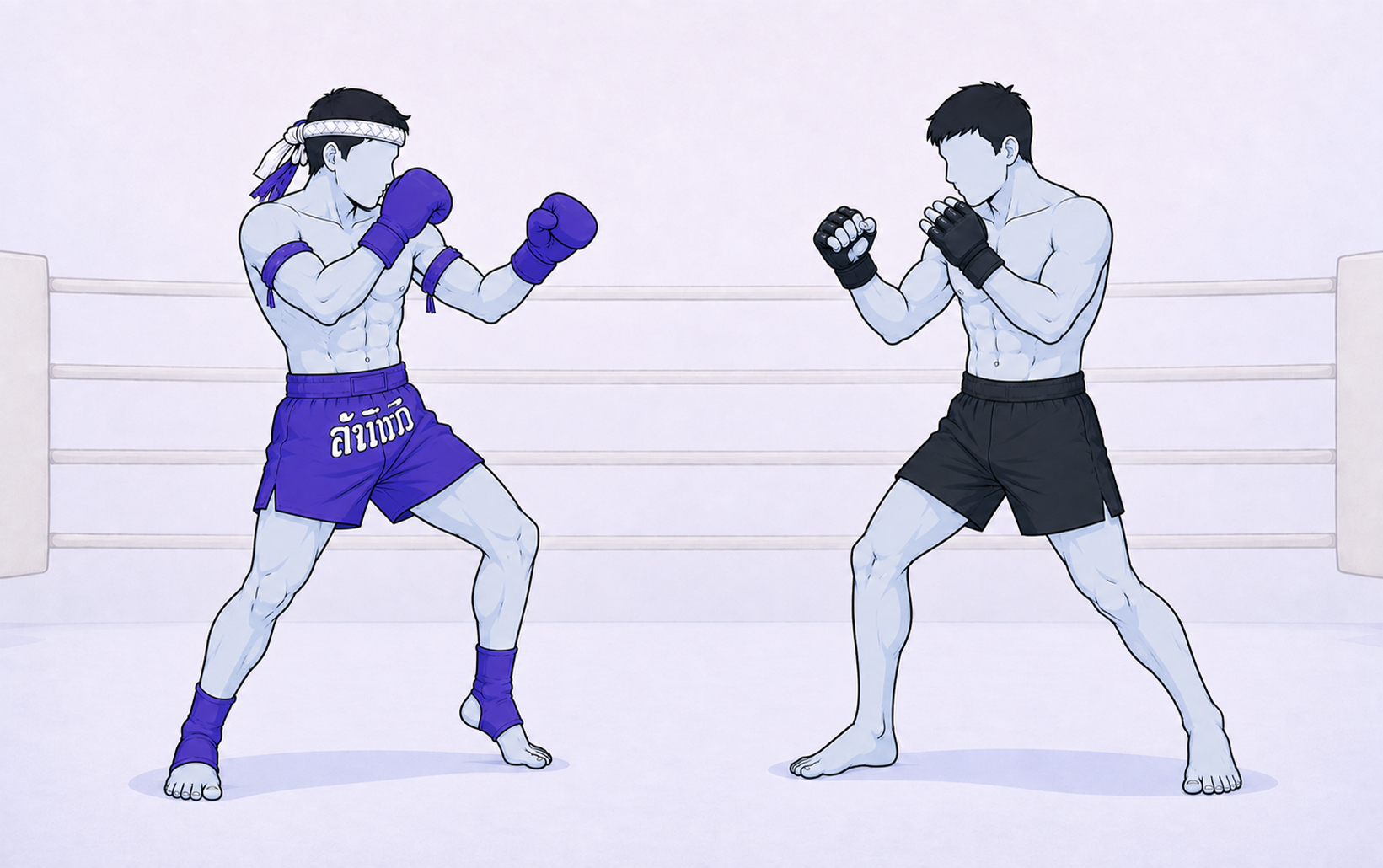
Traditional Muay Thai and entertainment Muay Thai are two different approaches to the same sport. The main difference lies in rules, pacing, scoring emphasis, and presentation, rather than the techniques themselves.
Traditional Muay Thai prioritises long-established scoring criteria, five-round fights, and strategic pacing. Entertainment Muay Thai is designed to be more accessible to wider audiences, often featuring shorter fights, faster action, and simplified scoring to make outcomes easier to understand.
What Is Traditional Muay Thai?
Traditional Muay Thai refers to the rule set and scoring system historically used in Thailand’s major stadiums. It is built around five-round fights and a strong emphasis on control, balance, defence, and effectiveness rather than constant aggression.
Key characteristics include:
- Five-round bouts
- Strategic pacing, with later rounds often carrying more importance
- Scoring that rewards balance, composure, and visible control
- Clinching as a major part of the sport
- Less emphasis on constant forward pressure
In traditional Muay Thai, fighters may spend the early rounds assessing each other, building rhythm, and setting traps before increasing intensity later in the fight.
How Traditional Muay Thai Is Scored
Traditional scoring places value on:
- Clean, effective strikes
- Balance and posture after attacks
- Controlling the clinch
- Demonstrating composure under pressure
A fighter who remains calm, balanced, and in control can be winning even if they are not throwing the highest volume of strikes. This can sometimes appear slow or confusing to new viewers but reflects the sport’s historical judging criteria.
What Is Entertainment Muay Thai?
Entertainment Muay Thai is a modern presentation of the sport designed to appeal to broader and international audiences. While the core techniques remain the same, the rules and format are often adjusted to encourage faster-paced action.
Common features include:
- Shorter fights (often three rounds)
- A stronger emphasis on aggression and forward pressure
- Simplified scoring criteria
- Reduced clinching time
- Presentation focused on television and streaming audiences
The goal is to make fights more immediately engaging and easier to judge for viewers unfamiliar with traditional Muay Thai scoring.
Differences in Pacing & Strategy
One of the biggest differences between the two formats is how fighters manage energy and strategy.
- In traditional Muay Thai, fighters often conserve energy early and build toward later rounds
- In entertainment formats, fighters are encouraged to start fast and maintain pressure throughout
This difference in pacing can significantly change how fights look, even when the same techniques are used.
Why Both Formats Exist
The growth of global audiences has created demand for different ways to present Muay Thai. Traditional formats maintain cultural continuity and depth, while entertainment formats prioritise accessibility and commercial viability.
Neither approach is inherently better; they simply serve different purposes.
Does One Replace the Other?
Entertainment Muay Thai is not a replacement for traditional Muay Thai. Instead, it exists alongside it as an alternative format.
Traditional Muay Thai continues to preserve the sport’s cultural roots and long-standing scoring system. Entertainment Muay Thai offers a format that suits modern broadcasting, shorter attention spans, and international audiences.
Both formats provide opportunities for fighters, and some athletes compete in both depending on the event and rule set along with the fighters preferred style.